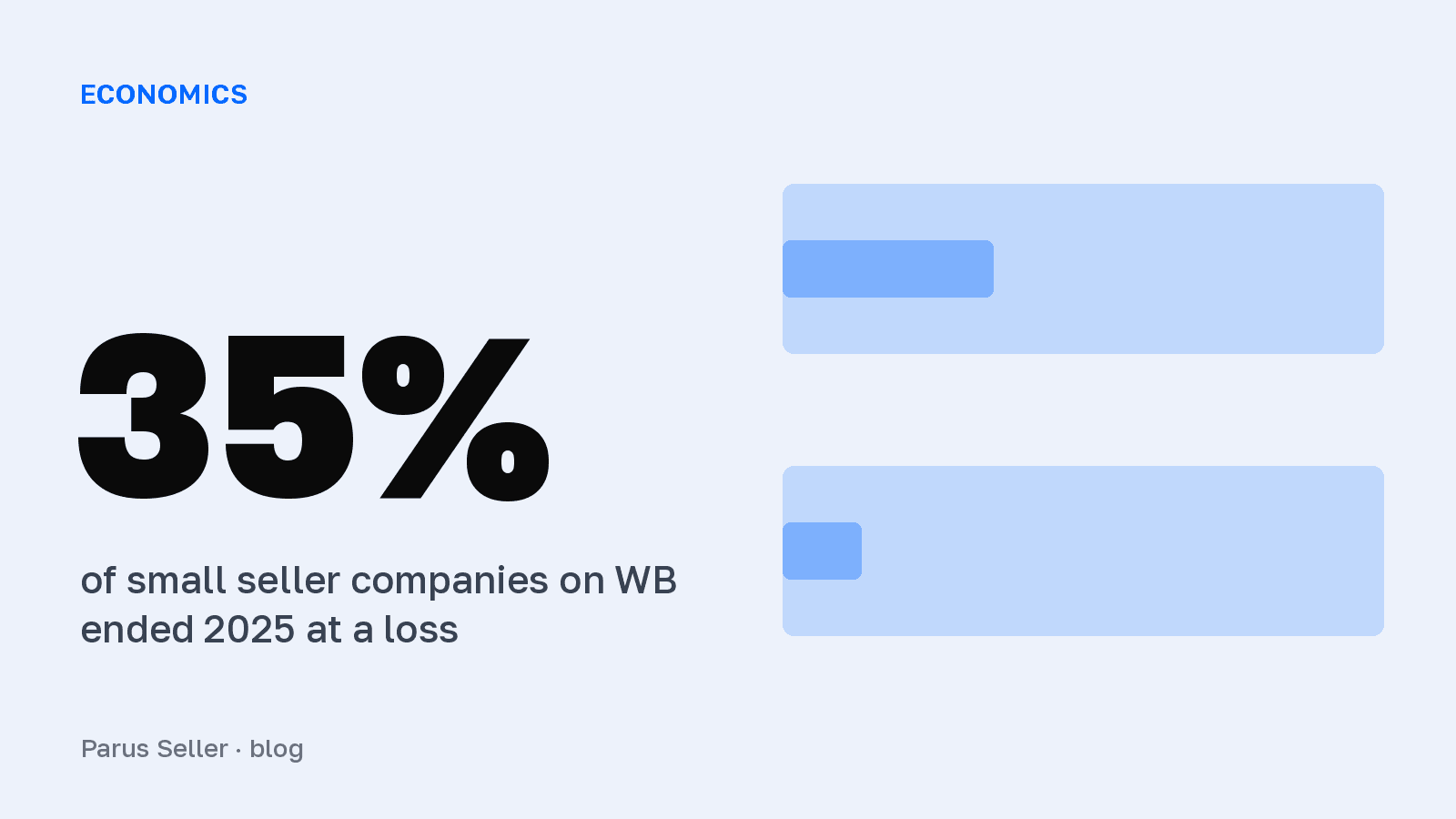
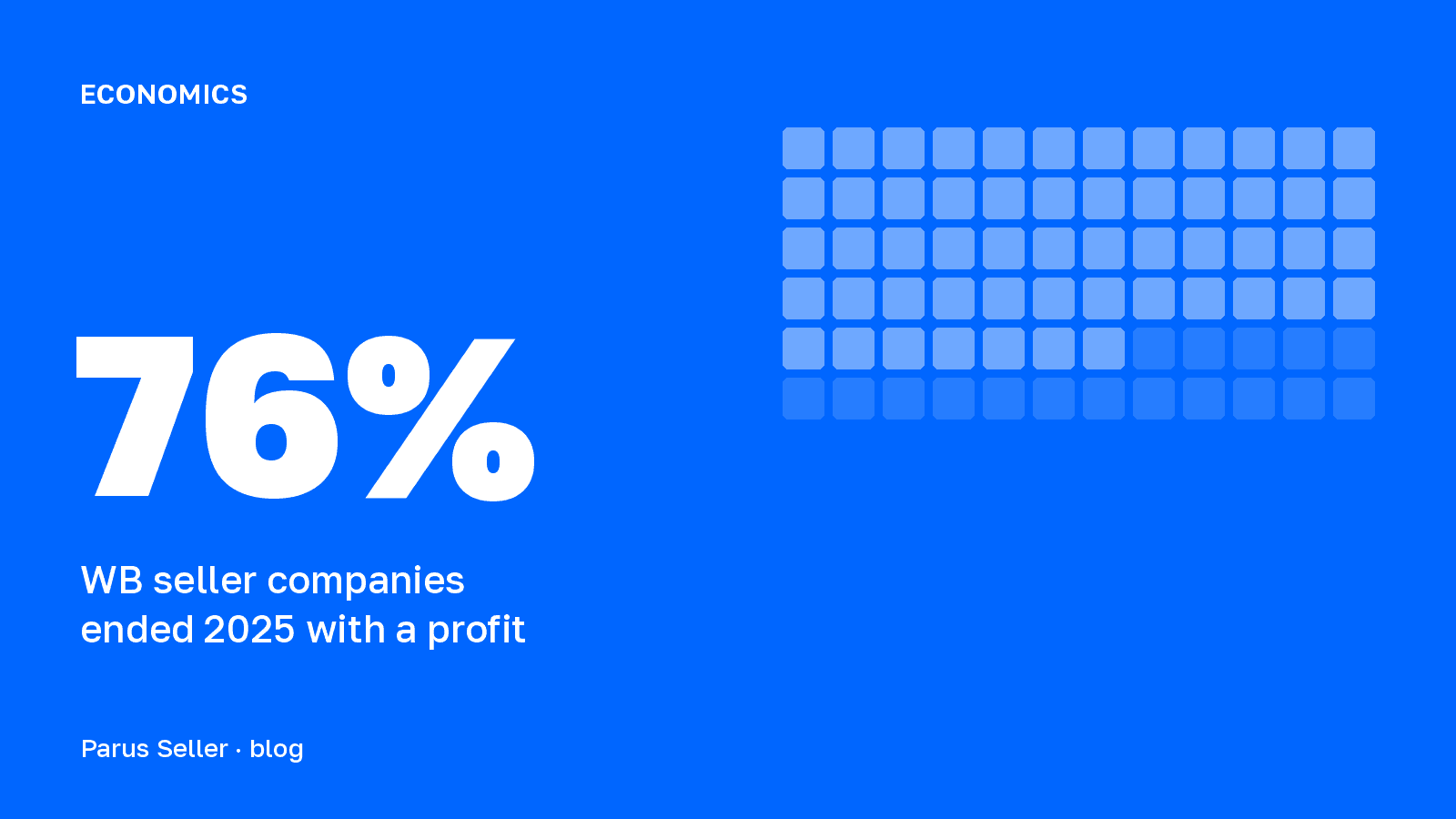
Is it worth starting a business on WB in 2026: yes, if you treat it as thin-margin retail rather than quick money. According to Federal Tax Service data for 2025, 76% of companies selling on Wildberries made a profit, the median profit was 840,000 ₽ for the year, at a margin of 3.4% of income. Among small companies with income up to 10 million ₽, one in three is at a loss, so what decides the outcome is not the marketplace but the economics of the specific product.
A business on Wildberries looks simple: the warehouse, the delivery and the customers are already there, all you have to do is bring the product. In practice it is ordinary retail, where the marketplace takes most of the customer's money and the profit stays with those who calculated it before buying stock. We took open FNS data on the income and expenses of 42,736 WB seller companies for 2025 and grouped them by line of business and size. That shows which business model earns more and where newcomers most often fall into the red.
In short: 76% of companies on WB made a profit for 2025, with a median of 840,000 ₽ a year at a margin of 3.4%. Retail has the highest margin, 5.2%, but also more loss-makers. There is one mandatory payment at the start, 5,000 ₽. Small companies fall into the red three times as often as large ones: 35% versus 13%.
Is it worth starting a business on Wildberries in 2026
It is worth starting if you are ready to count every sale and keep a reserve for the first months. Three companies out of four ended 2025 with a profit, 23% with a loss. The median company revenue is 25.9 million ₽ a year, the median profit is 840,000 ₽, or about 70,000 ₽ a month.
The key number here is the margin. A median of 3.4% means a company keeps just over 3 ₽ from every 100 ₽ of revenue. To earn 100,000 ₽ a month at that margin, you need revenue of about 2.9 million ₽ a month, and fewer than half of the companies on WB grow to that turnover. A detailed breakdown of income from tax data is in the article on how much sellers earn on WB.
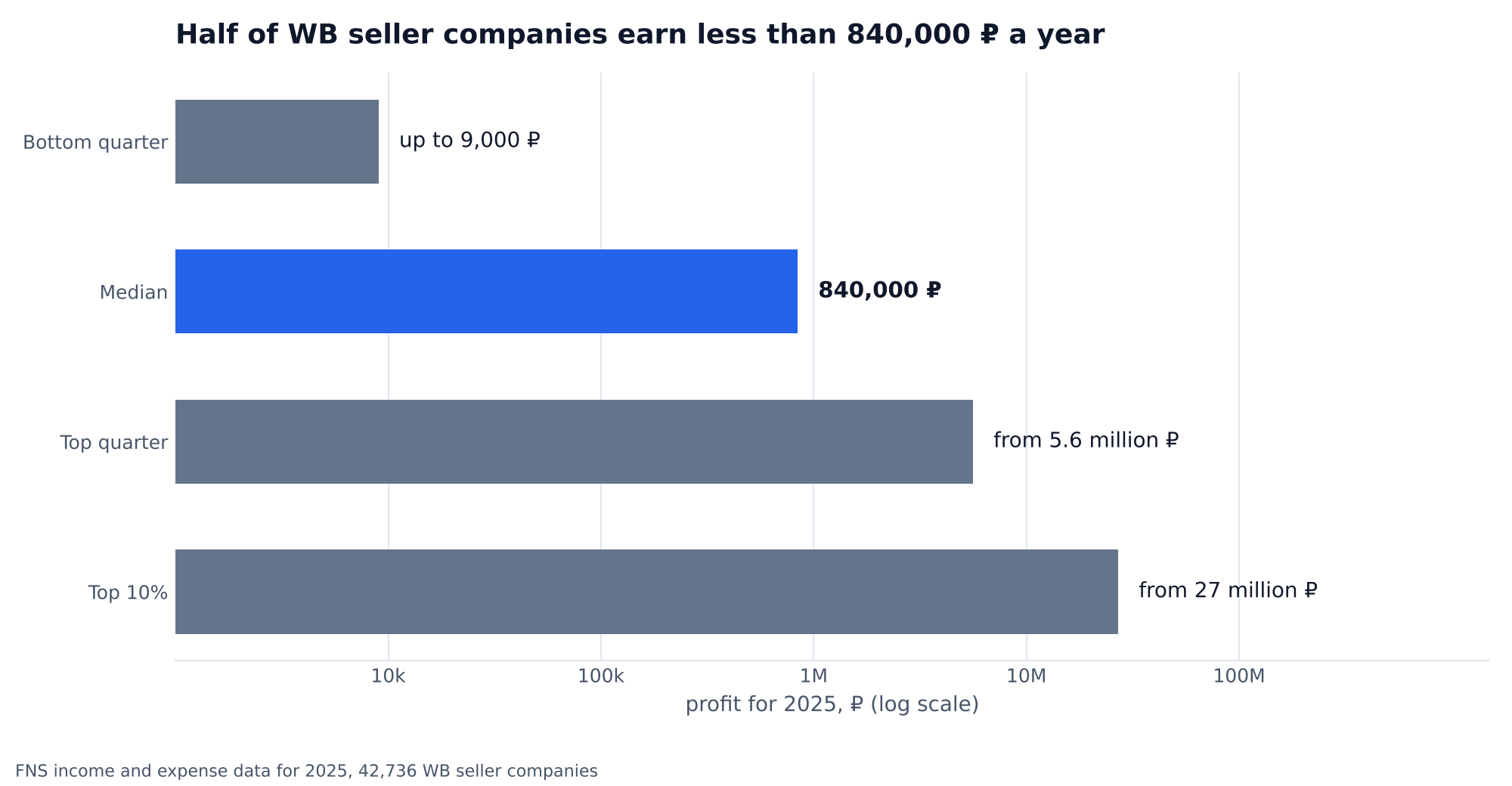
The spread matters more than the median here. A quarter of companies earned no more than 9,000 ₽ for the year, so in effect they broke even, while the top 10% made from 27 million ₽. The gap between them is three thousandfold, and the average profit across such a sample says nothing about what a newcomer should expect. An honest benchmark for the first year sits closer to the lower half of the chart.
Who runs a business on WB
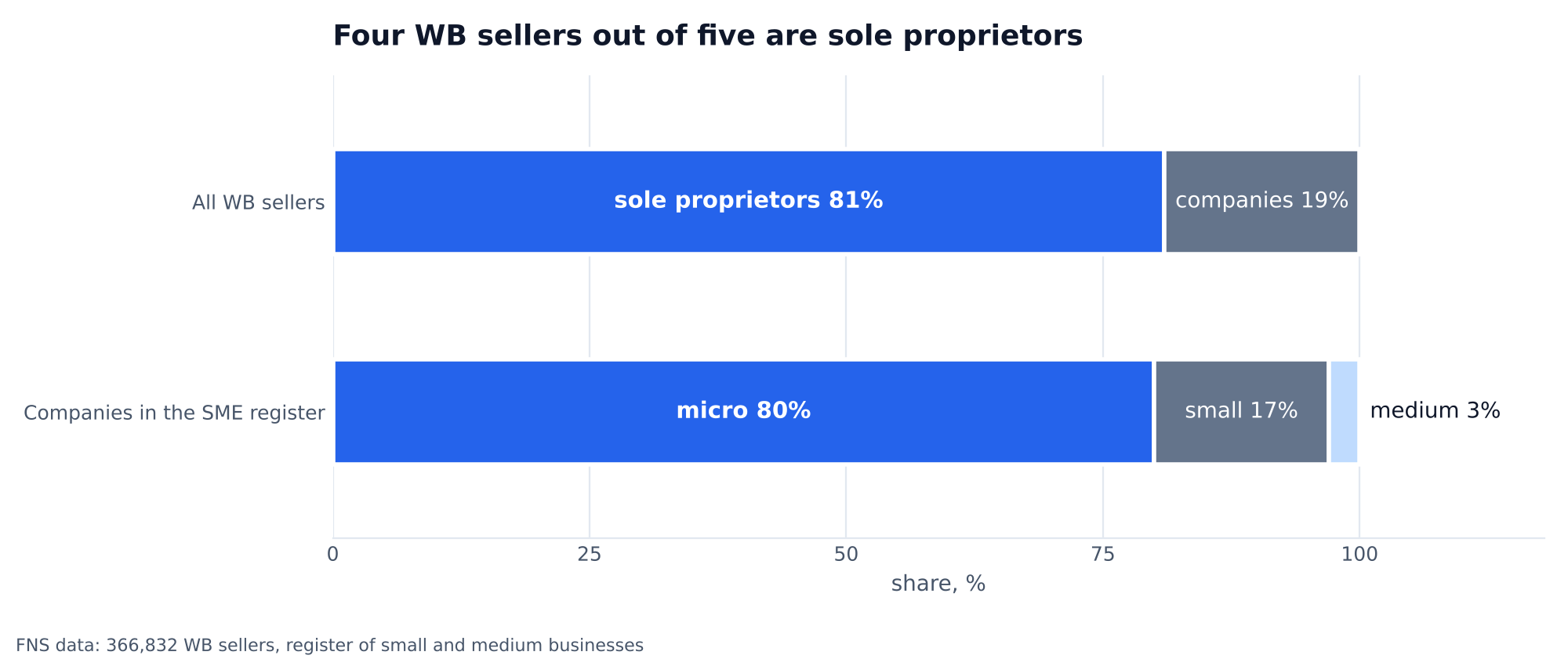
Most sellers on WB are small businesses. Of 366,832 sellers, 81% work as sole proprietors and 19% as companies. Half of seller companies have two employees or fewer, and 13% have no employees at all according to FNS data.
The catalogue shows the same picture. By our recount for September 2026, WB has 244,000 sellers with active cards, half of them have no more than three cards, and 32% have one. This is a normal entry point: most start with one product and expand once it begins to sell.
Which model to choose: reselling, manufacturing or wholesale
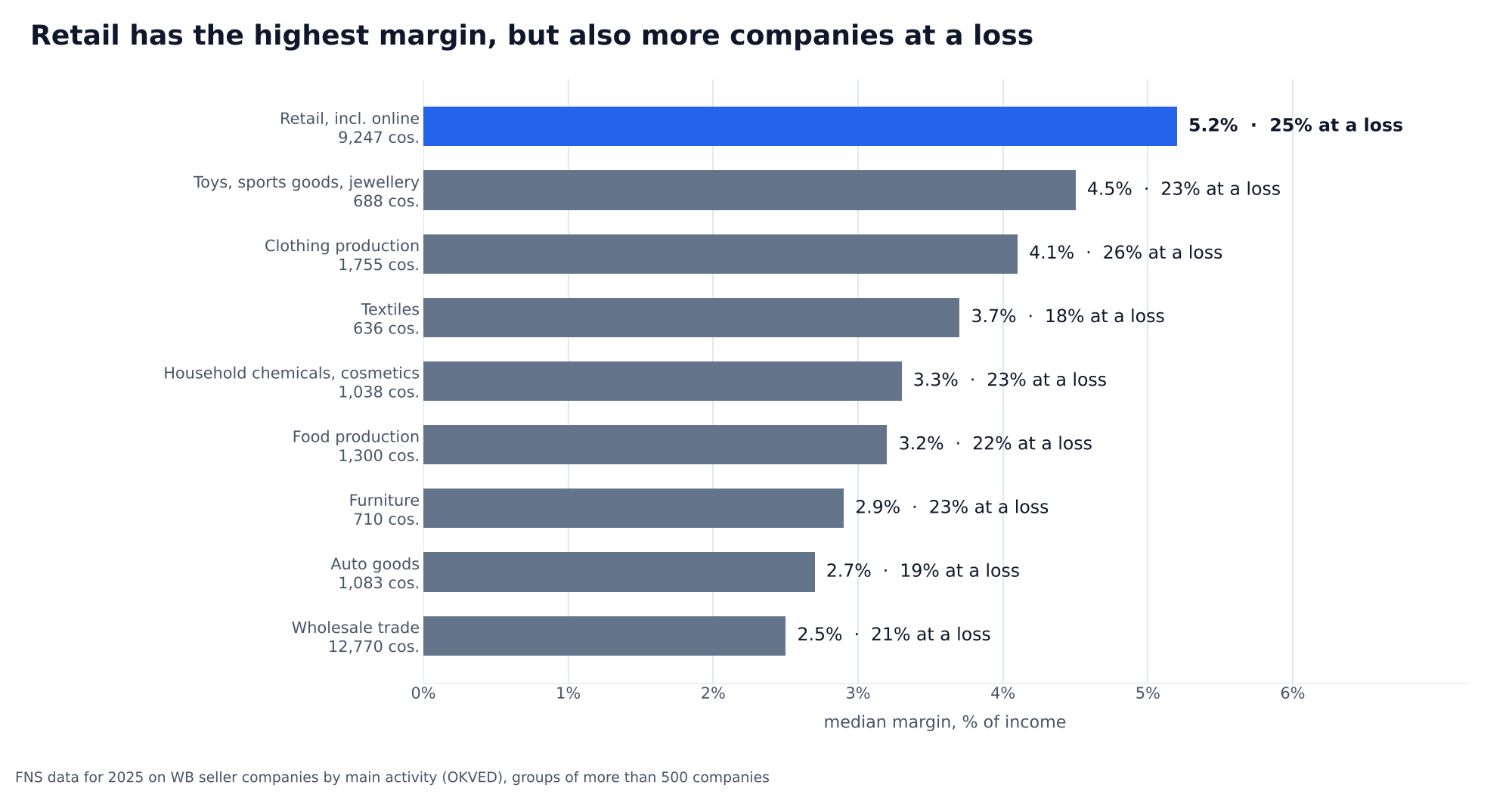
Every company in the registry has a main line of business, and it shows how different business models earn on WB. Retail trade, which covers most resellers, has the highest median margin: 5.2%. But it also has more loss-makers, one company in four.
Reselling gives the fastest start: you buy goods from a supplier and do not need to invest in production. That is also why competition is high: a dozen stores can sell the same product, and the price quickly slides to the minimum. The winner is whoever picked a niche where the leaders have not yet taken all the demand, as we showed in the article on what to sell on WB.
Your own production is protected from direct price competition, but it needs more money and time before the first sale. Manufacturers' margins in FNS data range from 2.9 to 4.5%, highest for toys, sporting goods and apparel. Textile companies have the fewest loss-makers, 18%.
Wholesale companies sell on WB with the thinnest margin, 2.5%, but with large turnover: median income is 41.9 million ₽, and they are the most numerous group, 12,770 companies. For them the marketplace is more often one more sales channel than the main business. For a newcomer this model is usually out of reach, because it requires your own warehouse and purchasing in large batches.
How much money you need to start
There is only one mandatory payment to the marketplace at the start: the 5,000 ₽ licence fee, which WB returns as promo bonuses for advertising. Everything else depends on the product: buying or producing the first batch, packaging and labels, marking if it is required, photos and cards.
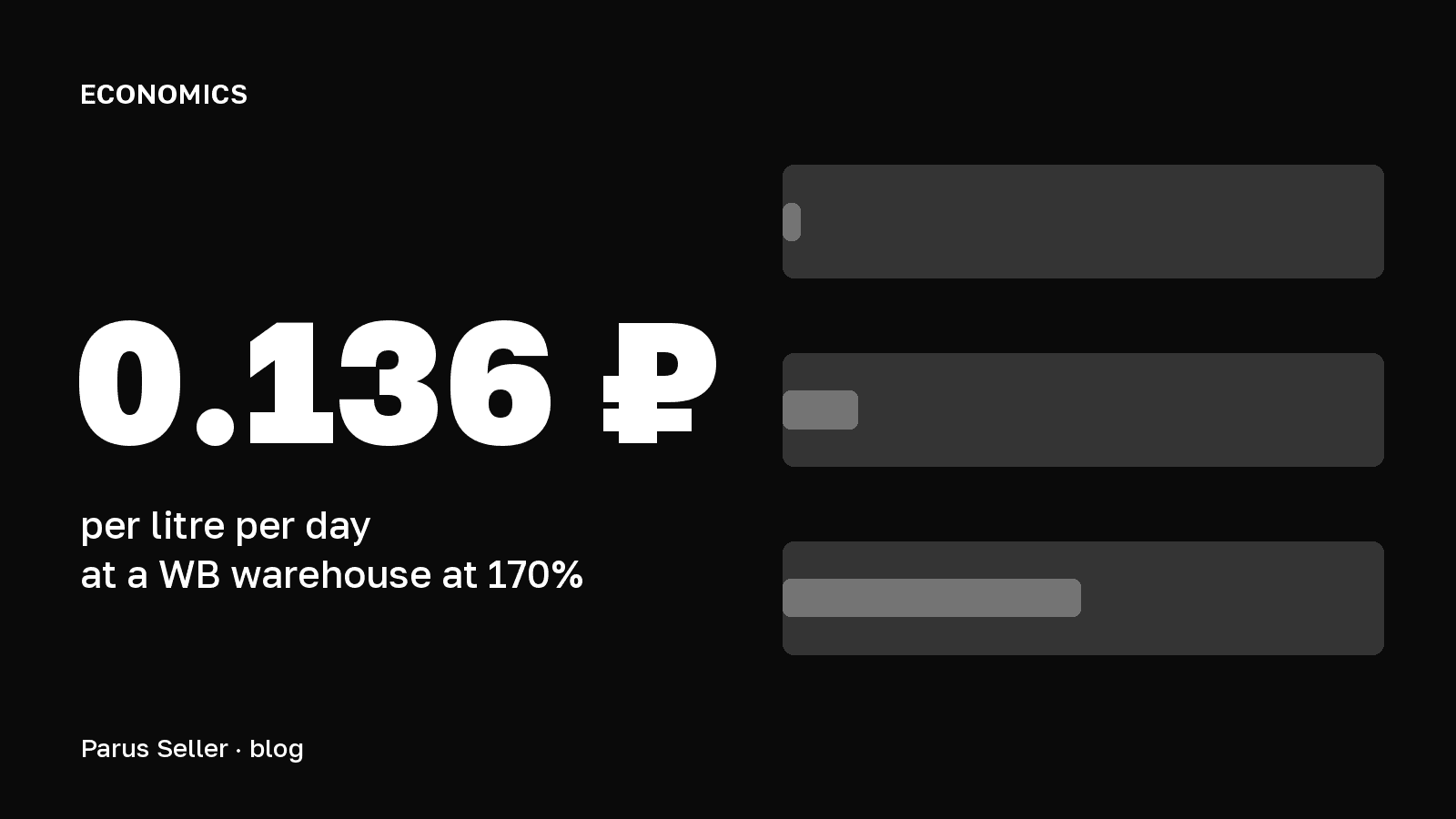
More important than the start budget is what is left from each sale. WB commission by category ranges from 3 to 45%, with a median of 34% from the WB warehouse, plus acquiring of about 4%, logistics and storage on top. For a store with a turnover of 6 million ₽ a month, WB kept 51.3% of the customers' money before the payout. So you need a reserve both for buying stock and for the first months, while the card collects reviews and advertising starts to pay off. We broke down the start budget step by step in the article on how to open a store on Wildberries.
Profit calculator for a single sale
Category commissions come from the WB API as of 05.09.2026, logistics use the basic WB rate. Every field is editable, the result updates instantly.
- Margin
- 2.5%
- Return on cost of goods
- 9%
- Break-even price
- 1,124 ₽
Maximum ad spend share that still keeps the sale at zero: 12.5%.
- WB commission486 ₽ · 40.5%
- Logistics with buyout rate92 ₽ · 7.7%
- Storage3 ₽ · 0.3%
- Ads120 ₽ · 10.0%
- Acquiring fee47 ₽ · 3.9%
- Tax72 ₽ · 6.0%
- Cost of goods350 ₽ · 29.2%
- Profit30 ₽ · 2.5%
Which form to choose: self-employed, sole proprietor or LLC
The legal form depends on the model. Self-employed status suits only your own production without Chestny Znak marking and with income up to 2.4 million ₽ a year; a self-employed seller cannot resell goods. Reselling requires a sole proprietorship: 81% of WB sellers work this way, and 81% of them are on the simplified tax regime. An LLC makes sense when the business has several owners or turnover is already large. A comparison of taxes by form is in the article on self-employed sellers on WB.
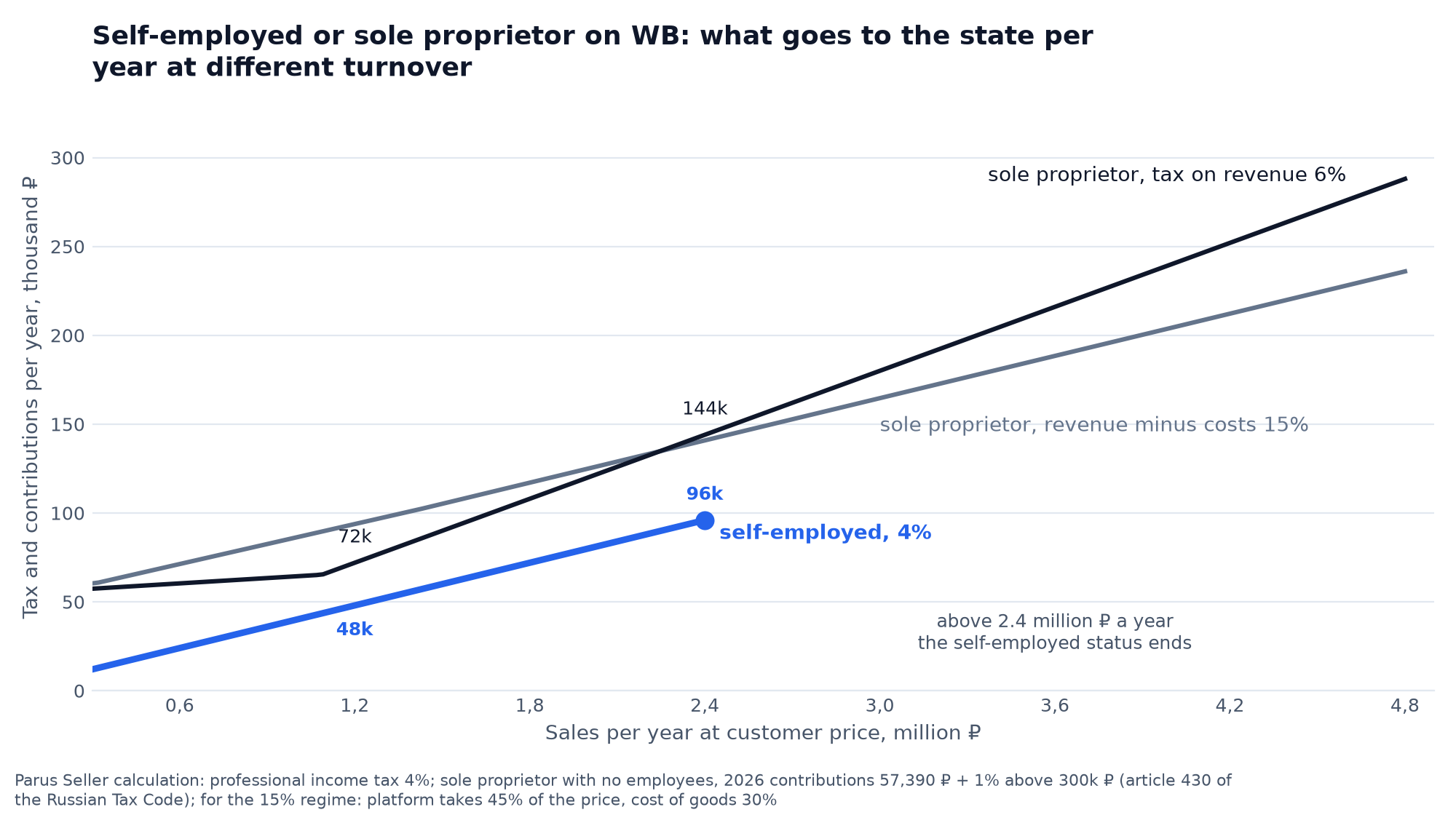
As long as sales stay within the cap, self-employed status is almost always cheaper: on sales of 1.2 million ₽ a year a self-employed seller pays 48,000 ₽, a sole proprietor on the simplified tax on revenue 72,000 ₽. But this saving is not available for reselling, so the choice is between the sole proprietor regimes.
The main risks of a business on WB
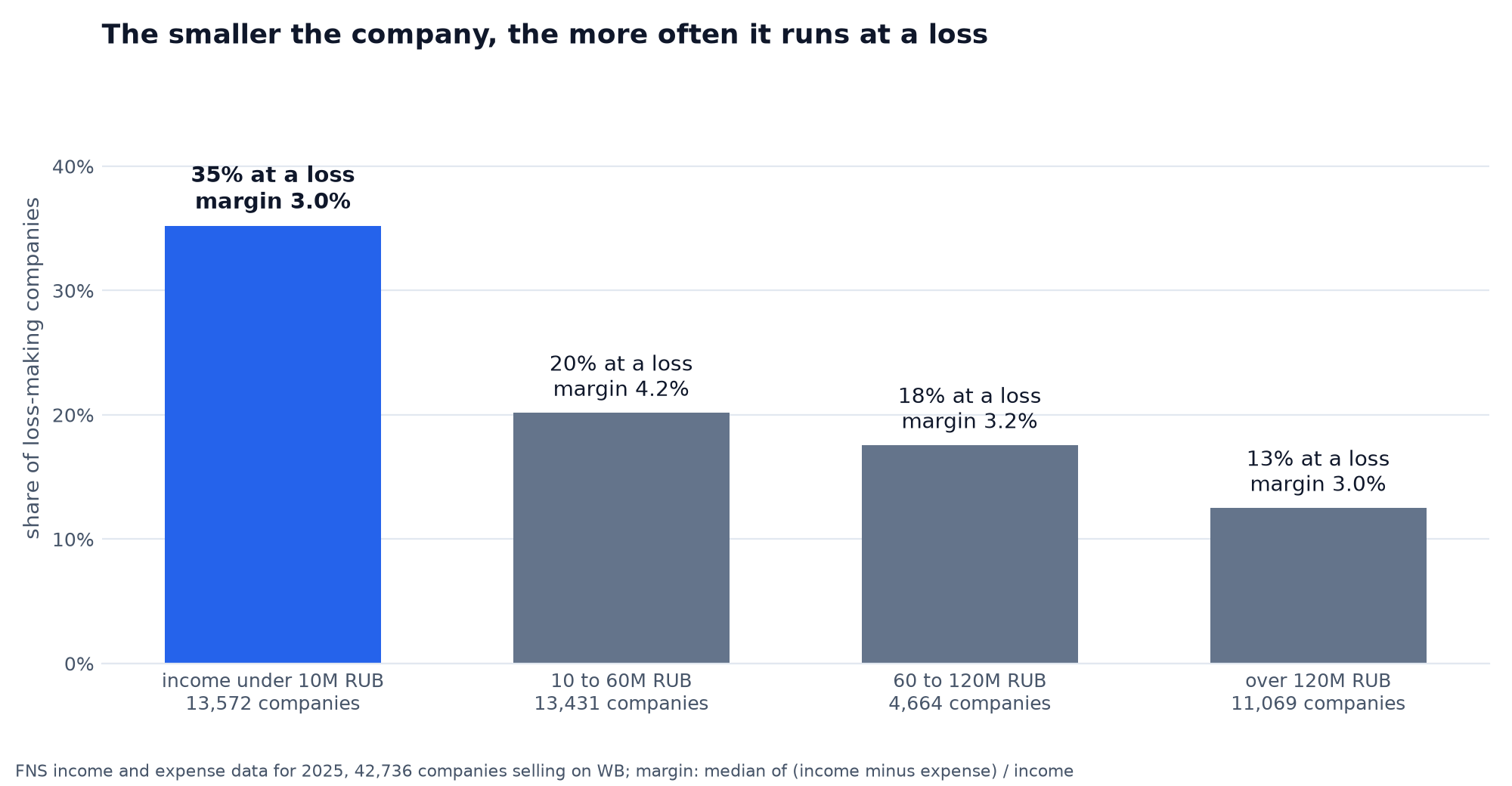
The first risk is size. The smaller the company, the more often it is at a loss: 35% at income up to 10 million ₽ versus 13% for companies from 120 million ₽. The median margin is almost the same, about 3%, so it is not that small companies trade worse. A small seller simply has less of a buffer to survive a failed purchase or ad campaign.
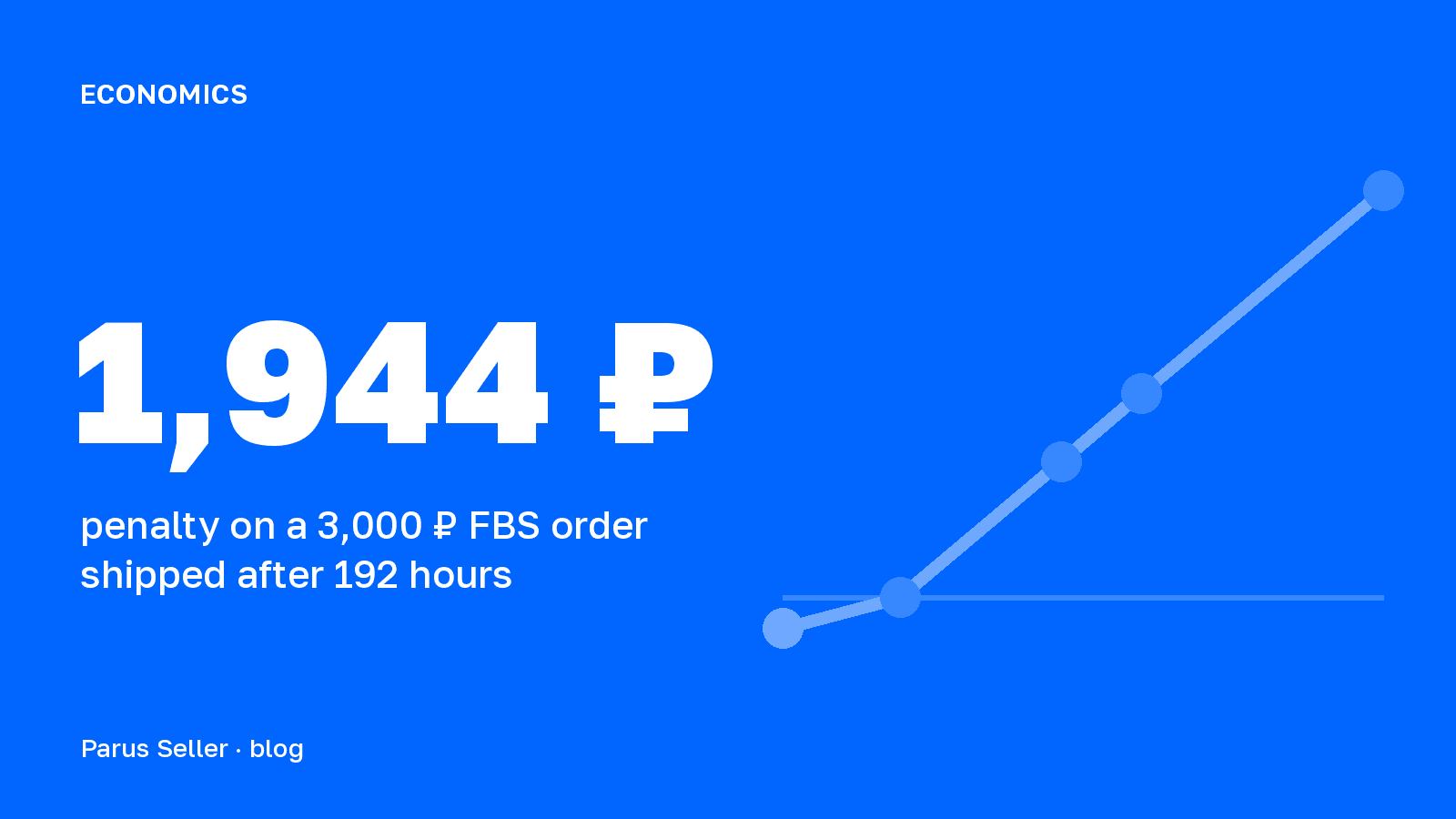
The second risk is the buyout rate. Every refused order is paid for with two trips, and at a low buyout rate logistics eats the margin. A 30 × 20 × 10 cm box at a 90% buyout rate costs about 232 ₽ of logistics per sale, and at a 30% buyout rate already about 928 ₽.
The third risk is the marketplace's rules. The WB offer agreement changes regularly: for 18 kinds of change the marketplace gives 45 days' notice, for the rest 15 days, and automatic rate recalculation applies immediately. Commissions, rates and fines change along with the offer agreement. A business that relies on a profit of 2% of the price can fall into the red after one such change, so the product's economics should be recalculated regularly, not just once before the start.
How to start a business on WB: yourself or turnkey
Starting yourself costs less money but more time: you will have to learn the niche, documents, cards, supply and advertising on your first batch. This path suits those who have time to learn and a reserve for mistakes.
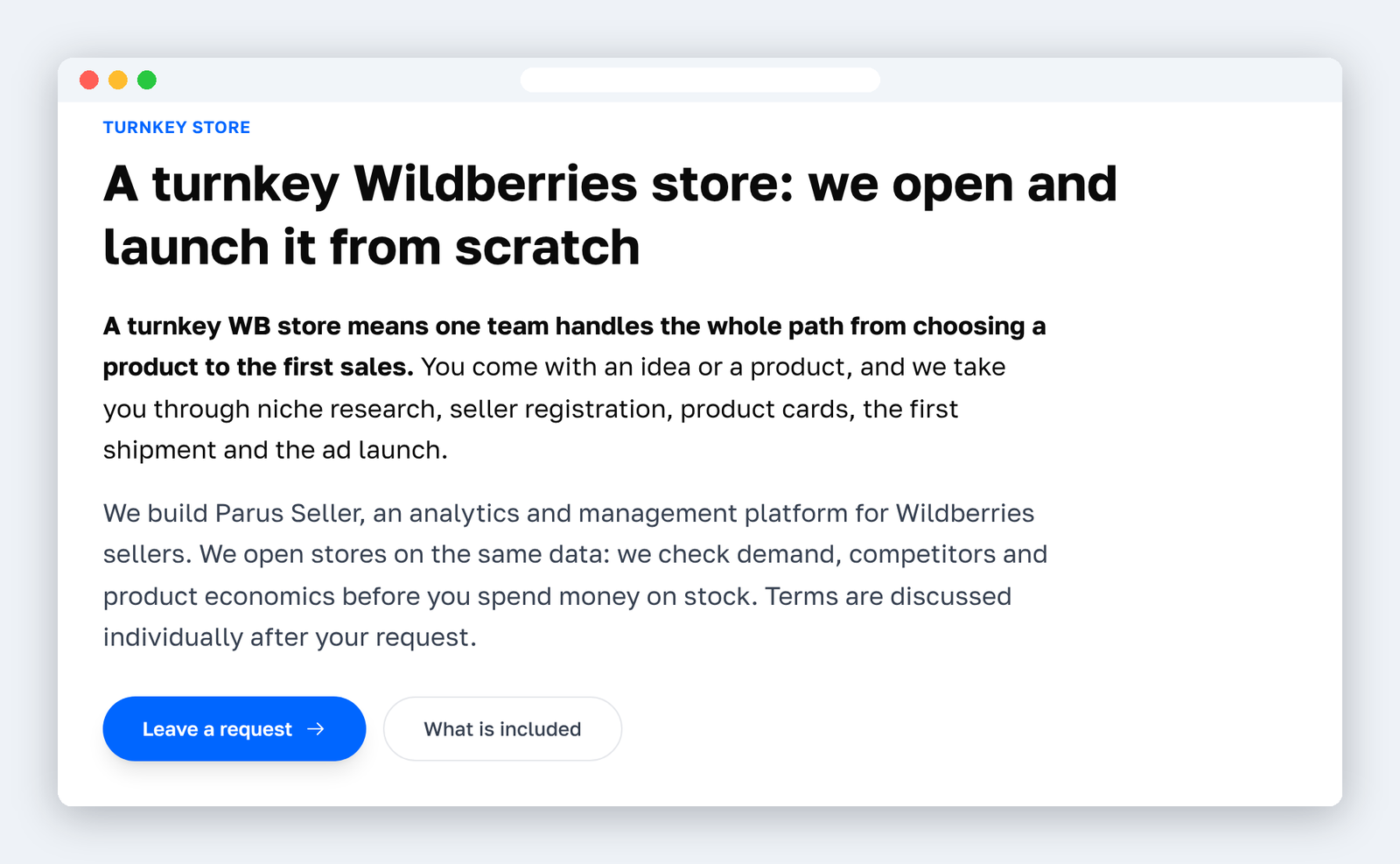
A turnkey launch suits those who want to start a business on Wildberries without months of learning the marketplace, or those who already have a product. We build Parus Seller, an analytics service for WB sellers, and we open stores on the same data: we check the niche and the product's economics before buying stock, help with registration, prepare the cards and launch the first sales. Terms depend on the product, so there is no single price: leave a request on the turnkey Wildberries store page, and a manager will send you the terms.
FAQ on business on WB
Can you start a business on WB without investment? No. Besides the 5,000 ₽ fee, you need money for the first batch of goods, packaging and the card. You choose the amount yourself, and it is wiser to start with a small batch to check demand and the buyout rate before a large purchase.
Which business on WB is the most profitable? According to FNS data, retail trade has the highest median margin, 5.2%, but it also has more loss-making companies, 25%. Among manufacturers, the highest margins are in toys and sporting goods, 4.5%, and apparel, 4.1%. Profitability is decided not by the category but by the economics of the specific product.
How much can you earn on WB per month? The median seller company earned 840,000 ₽ in 2025, about 70,000 ₽ a month, on revenue of about 2.2 million ₽ a month. There is no such data for sole proprietors, the tax authority does not publish it.