How to open a store on WB from scratch: register as a sole proprietor, an LLC or self-employed, sign up on the WB Partners portal with your phone number and tax ID, pay the 5,000 ₽ licence fee, create a product card and send your first supply. The seller account is usually activated within a day, and the first payout arrives about two weeks after the first sale. The hardest part is not registration but choosing a product that covers the commission, logistics and advertising.
For sellers, Wildberries looks like the shortest way into online retail: the warehouse, the delivery and the customers are already there, all you have to do is bring the product. That is why the question of how to get onto Wildberries comes from people who are only thinking about a business of their own, from manufacturers with a ready product and from stores that sell offline. Below we break the start into steps, show what the budget is made of, and give an honest comparison of two paths: opening the store yourself or handing the launch to a team.
In short: there is one mandatory payment to the marketplace at the start, 5,000 ₽. Sole proprietors, LLCs and self-employed people can open an account, and activation takes about a day. The median WB commission is 34% from the marketplace's warehouse, and a 30 × 20 × 10 cm box costs about 232 ₽ of logistics per sale at a 90% buyout rate. It is wiser to start with one product and a small batch.
How to get onto Wildberries from scratch
You can get onto Wildberries from scratch in five steps, and only the first one takes serious time. The rest take days if the product is already in hand.
The first step is the product. Before registering, work out what you will sell, how many sellers already trade it in the category, at what price, and how often customers actually buy out their orders. A niche with high demand and hundreds of sellers can turn out worse than a narrow niche where there are few cards and prices hold. We covered how to choose in the article on what to sell on Wildberries.
The second step is checking the product's documents. Some categories require Chestny Znak marking, a certificate or a declaration of conformity. If you find this out after buying stock, the batch can sit in the seller's warehouse for weeks.
The third step is registration. The WB Partners portal is open to legal entities, sole proprietors and self-employed people who are Russian tax residents. You register with a phone number and tax ID, then accept the offer agreement, choose a tax regime and pay the 5,000 ₽ fee. A detailed walk through all twelve steps of the WB instruction is in the article on how to sell your own product on WB.
The fourth step is the product card. The title, attributes and description should answer customers' search queries, and the photos should show the product well enough to make a decision from them. Cards are created in the seller account one at a time or through a table, and we described how to fill one in in the article on the product card.
The fifth step is the first supply and the start of sales. A beginner finds it easier to start with the "Marketplace" model (FBS): the goods stay with you, you pay nothing for storage at a WB warehouse, and once the card sells steadily, part of the stock can be moved to "WB warehouse".
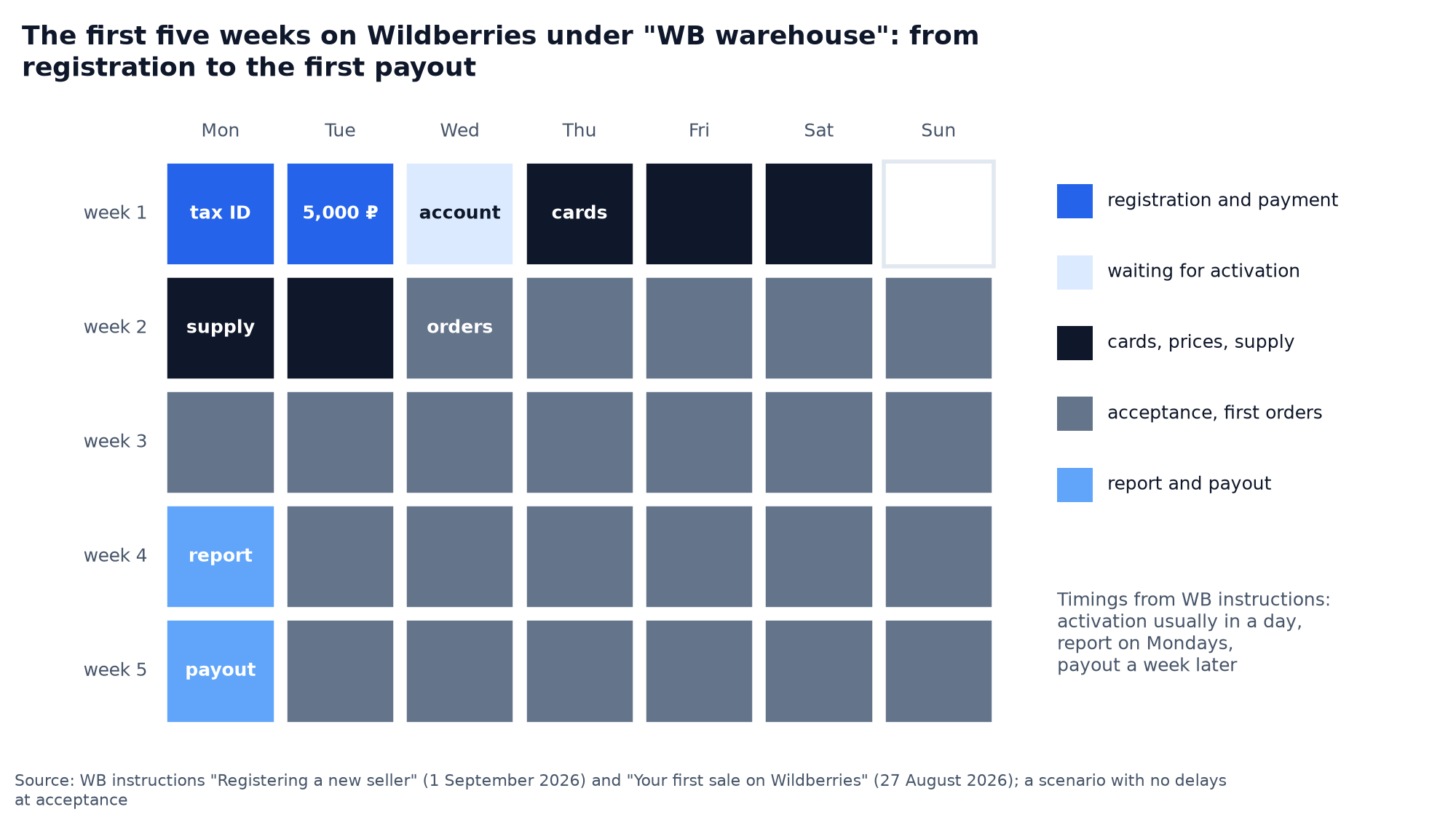
Going by the deadlines in the WB instructions, about five weeks pass from registration to the first payout: the account opens on the third day, the supply goes to the warehouse early in the second week, and the money for the first sales arrives after the weekly report and the request.
How much it costs to open a store on Wildberries
There is only one mandatory payment to the marketplace at the start: the 5,000 ₽ licence fee. WB credits it as promo bonuses to the advertising account, they can be spent within a year, and the fee is not returned in money. Everything else depends on the product, so it is more honest to count not a total sum but what is left from a single sale.
One-off costs come before the first order. That is buying or producing a trial batch, packaging and labels, Chestny Znak marking if the product needs it, and photos and infographics for the card. The biggest item is almost always the stock, and you choose its size yourself: a batch of 50 or 100 units costs several times less than a full launch of several cards.
Per-sale costs matter more, because they decide whether the store pays off at all. WB commission by category ranges from 3% to 45%, with a median of 34% from the WB warehouse and 38% under FBS, plus acquiring of about 4% of the customer's payment on top. Logistics is charged by volume: a 30 × 20 × 10 cm box at a 90% buyout rate costs about 232 ₽ per sale, and at a 30% buyout rate the same box costs about 928 ₽, because for every sale the item travels to a customer and back several times. Add storage if the goods sit in a WB warehouse, advertising and tax.
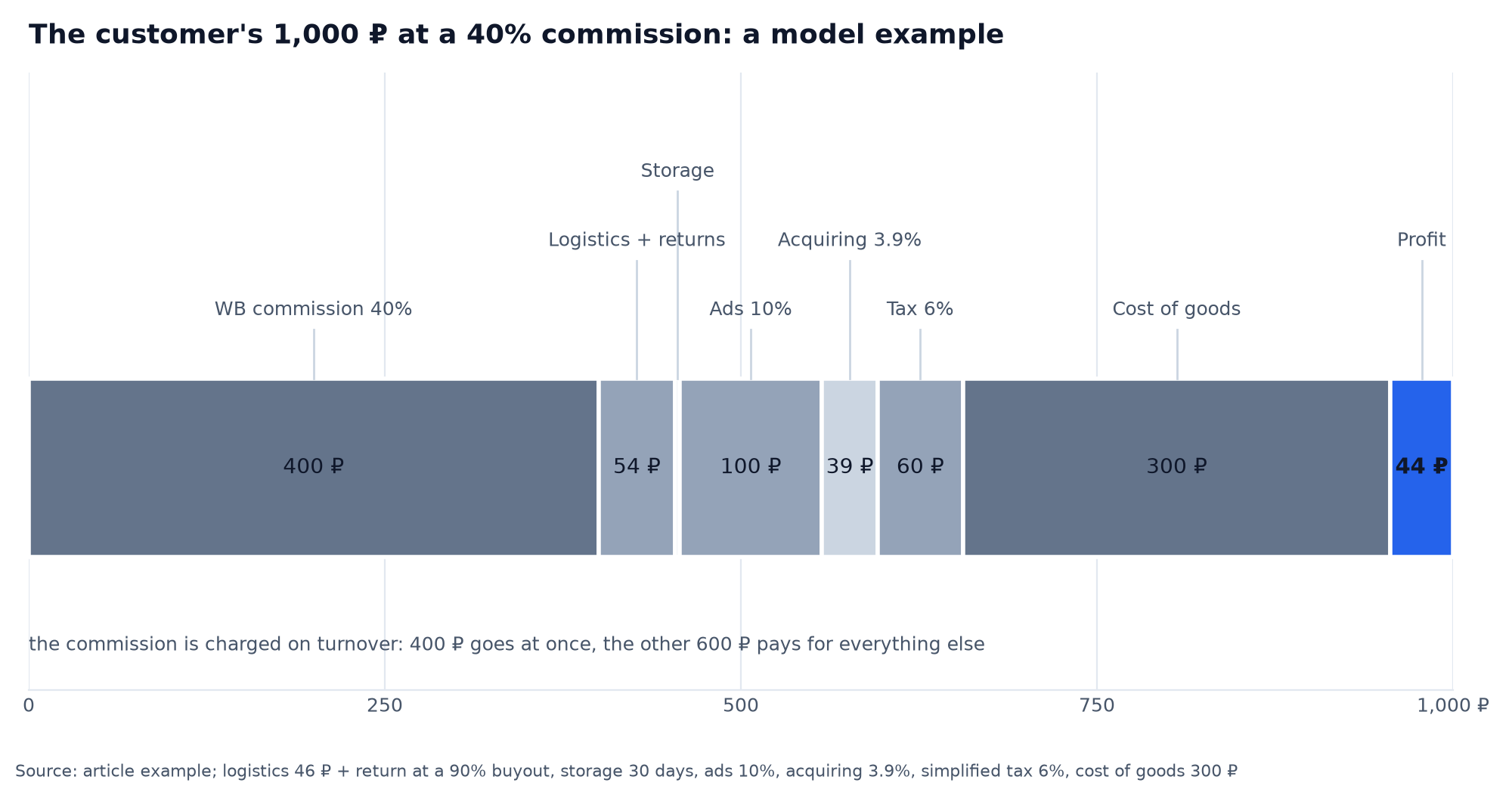
For a phone case store with a turnover of 6 million ₽ a month, WB kept 51.3% of the customers' money before the payout, and the full breakdown is in the article on how much Wildberries takes from a seller.
You can count your own product right here: the calculator below works out the profit per sale using the marketplace's formulas.
Profit calculator for a single sale
Category commissions come from the WB API as of 05.09.2026, logistics use the basic WB rate. Every field is editable, the result updates instantly.
- Margin
- 2.5%
- Return on cost of goods
- 9%
- Break-even price
- 1,124 ₽
Maximum ad spend share that still keeps the sale at zero: 12.5%.
- WB commission486 ₽ · 40.5%
- Logistics with buyout rate92 ₽ · 7.7%
- Storage3 ₽ · 0.3%
- Ads120 ₽ · 10.0%
- Acquiring fee47 ₽ · 3.9%
- Tax72 ₽ · 6.0%
- Cost of goods350 ₽ · 29.2%
- Profit30 ₽ · 2.5%
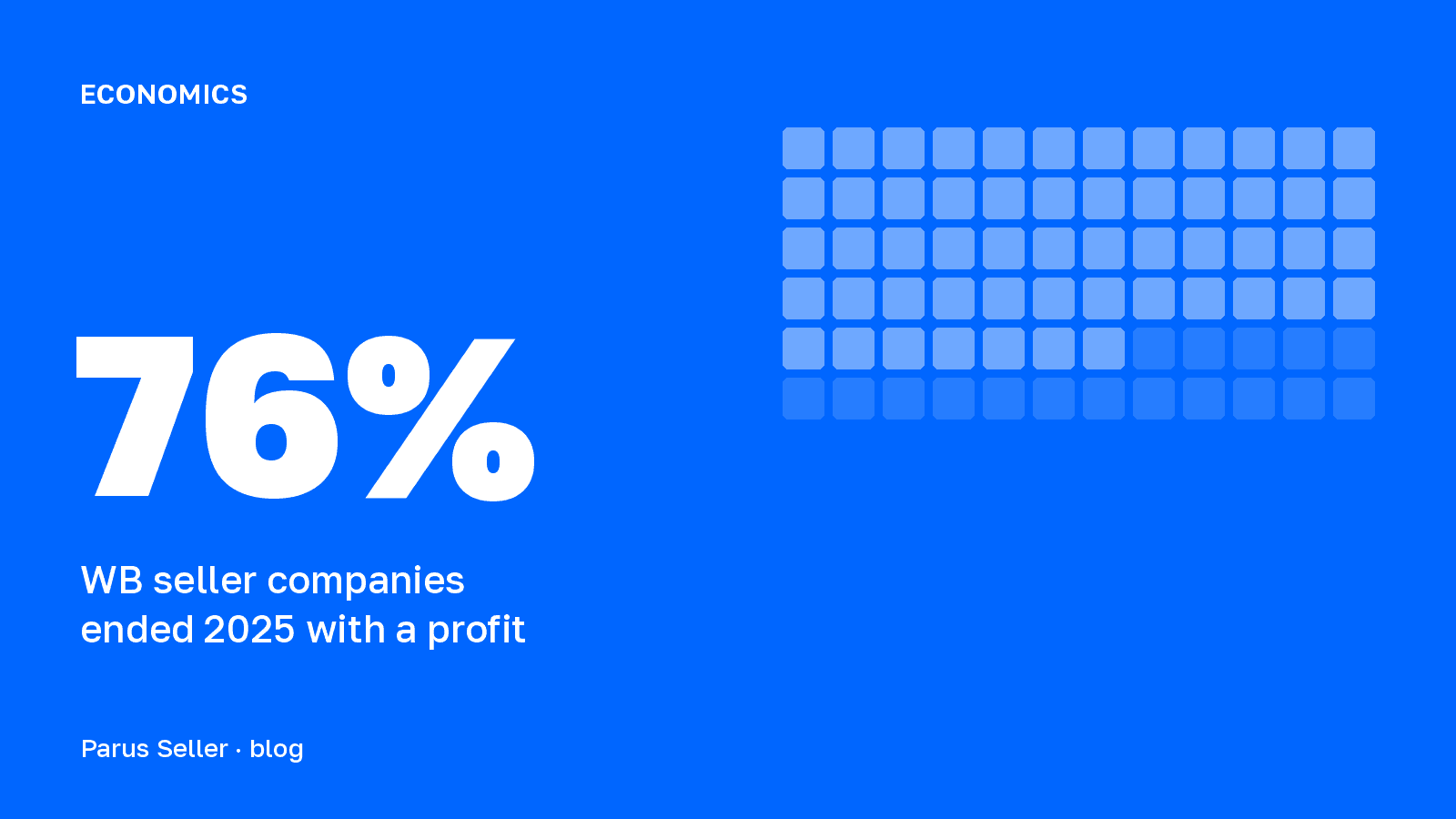
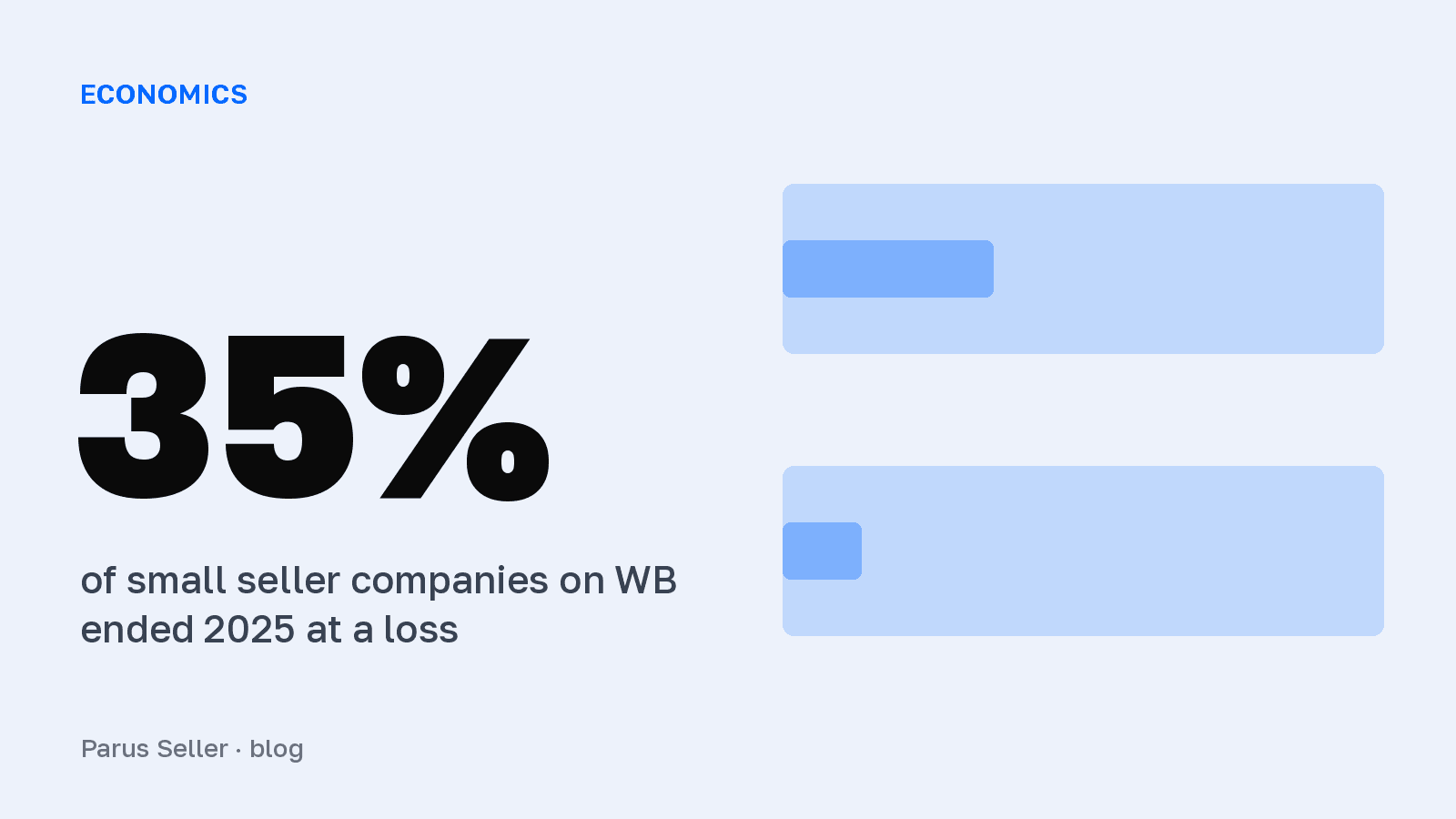
The total budget is easiest to build backwards. Start with the profit from one sale, then the size of the trial batch, then a reserve for advertising and for part of the batch selling more slowly than you would like. If the profit per sale comes out close to zero already in the calculator, in real reports it will turn negative: according to Federal Tax Service data for 2025, almost one in four companies selling on WB (23%) made a loss, and among small companies with income up to 10 million ₽ the figure is 35%. How to check the model against the report we described in the article on unit economics.
Do you need a sole proprietorship for Wildberries
You do not always need a sole proprietorship for Wildberries, but you do need some status: a private individual with no status will not get a seller account. The choice is between three options.
Self-employed status is the fastest to get, in a day through the My Tax app, and the 5,000 ₽ fee can be paid from a personal card. But there are many restrictions: only goods of your own making, no Chestny Znak marking, no employees, and income of no more than 2.4 million ₽ a year. A self-employed seller cannot sell clothing and footwear even if they sewed it themselves, because these goods are marked. We covered this in detail in the article on self-employed sellers on WB.
For most people who buy goods from a supplier and sell them on the marketplace, a sole proprietorship is the right fit. Registration takes a few days, and the tax regime can be chosen to fit your model. An LLC makes sense when the business has several owners, when you need to work with large suppliers, or when you plan large turnover.
If you are unsure, start with whatever fits the product today and change the form when it becomes worthwhile. Changing status is easier than losing the first months searching for the ideal setup.
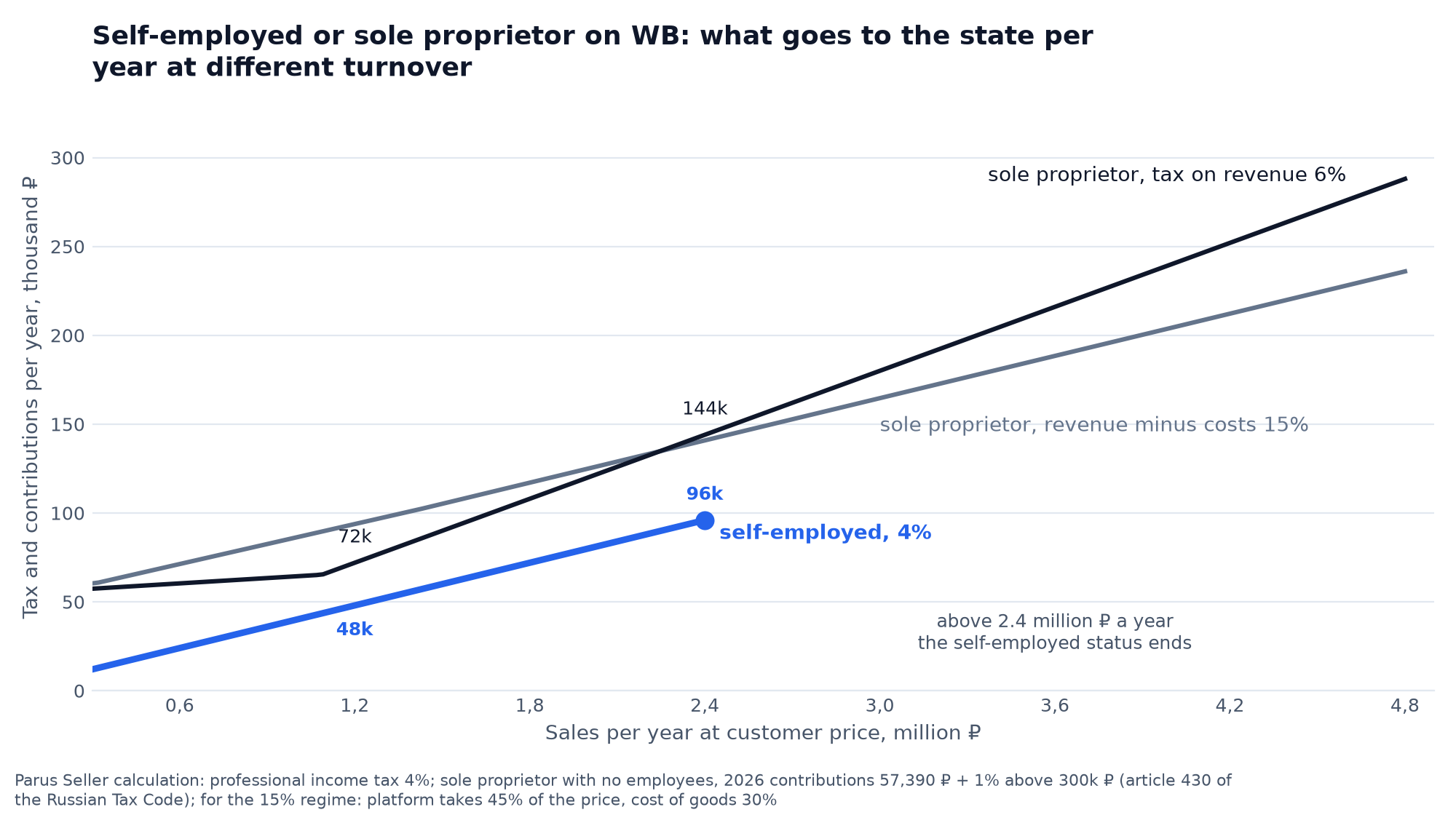
The tax difference is noticeable: on sales of 1.2 million ₽ a year a self-employed seller pays 48,000 ₽, a sole proprietor on the simplified tax on revenue 72,000 ₽. But choosing by tax makes sense only when the product fits the restrictions of self-employed status.
Where to start selling
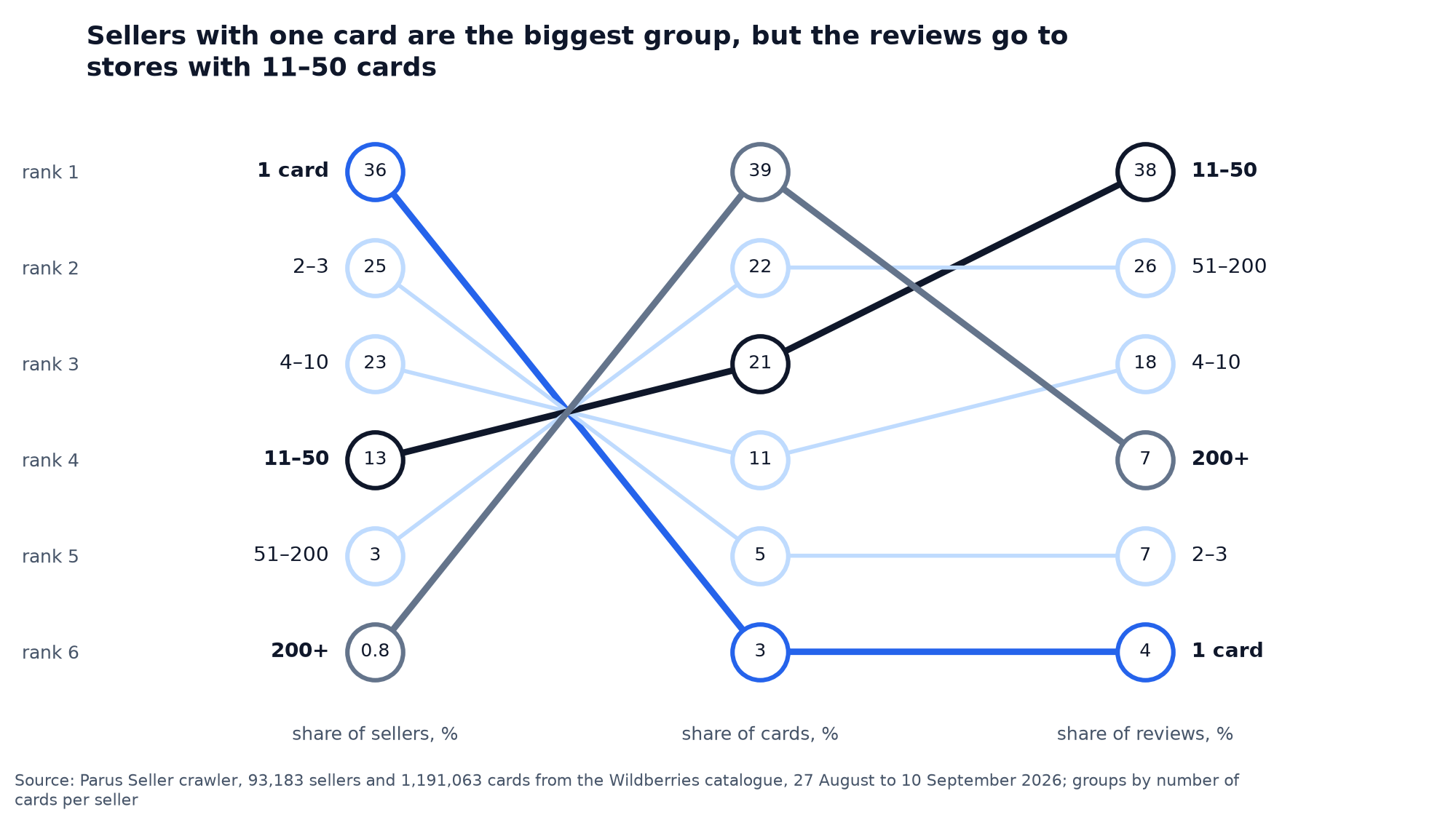
Start selling with one product and a small batch. This is not a sign of doubt but a normal entry point: our data shows 36% of sellers in WB popular search run a single card. A trial batch shows three things you cannot know in advance: how the card ranks in search, what its buyout rate is, and how much an order really costs once advertising is counted.
Enter the cost of goods on the very first day. The WB seller account shows revenue, not profit, and without the cost of goods a seller learns about a loss from the settlement report, when the batch is already sold. We described how to count profit for each product in the article on unit economics.
The promo bonuses from the licence fee are better not spent in the first week. The first reviews appear a few weeks after sales start, and that is when advertising begins to bring orders instead of impressions alone.
And finally: do not send a large batch to the WB warehouse until the card has shown its first orders. Storage is charged by the day, a refused order is paid for with two trips, and on a trial batch that eats the margin faster than the commission does.
Open it yourself or turnkey
Opening a store yourself costs less money but more time. You deal with the niche, documents, cards, supply and advertising yourself, and pay for almost every mistake out of the first batch. This path suits those who have time to learn and a reserve for experiments.
A turnkey launch suits those who want to start a business on Wildberries but are not ready to spend months learning the marketplace, or those who already have a product and need to bring it to WB quickly and without unnecessary losses. In this case one team runs the whole path: it checks the niche and the product's economics, helps with seller registration, prepares the cards, organises the first supply and launches advertising.
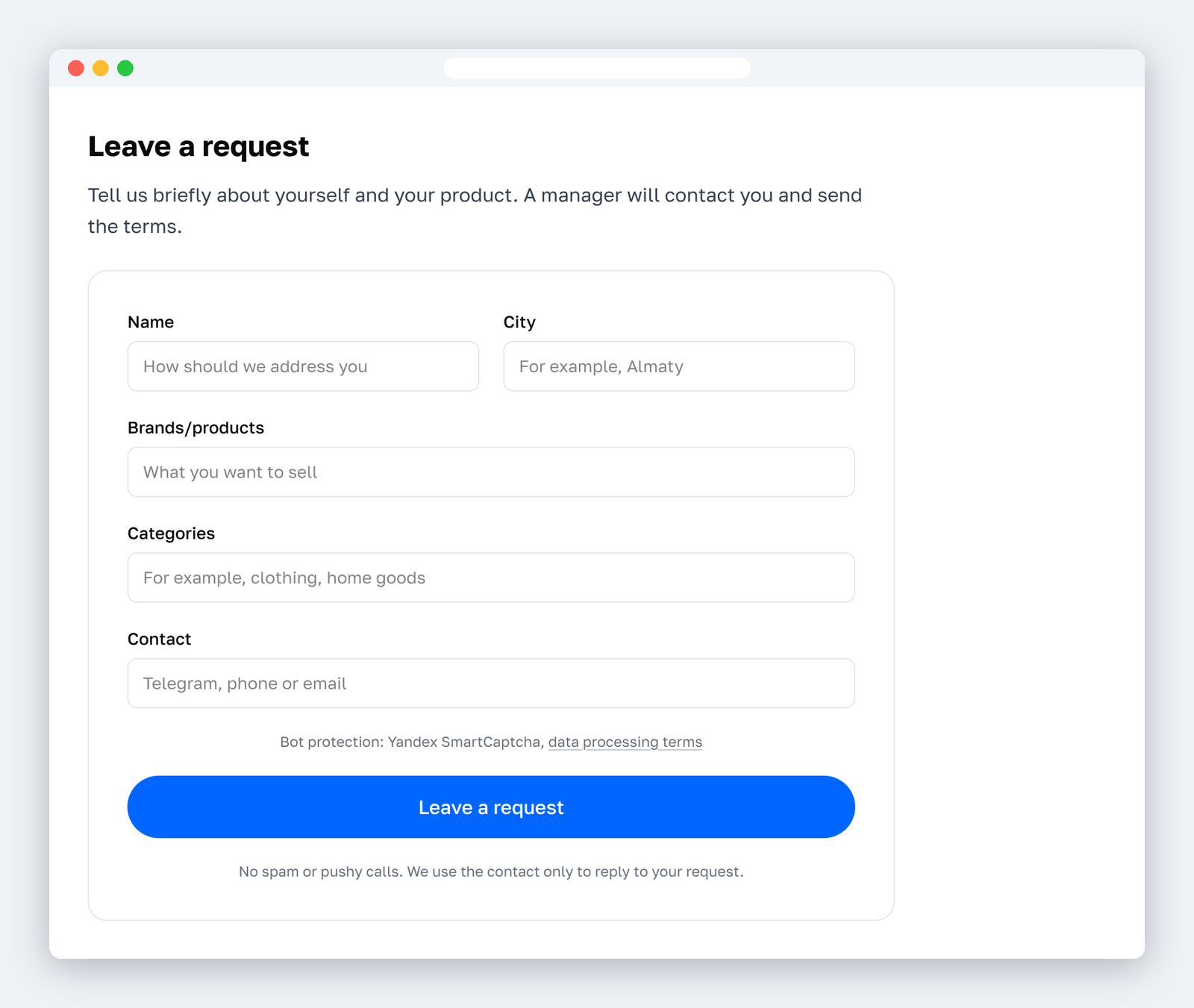
We build Parus Seller, an analytics service for Wildberries sellers, and we open stores on the same data our reports and auto-bidder run on. Decisions on product, price and advertising are made from the numbers, and after the launch the store stays connected to our tools. Terms depend on the product and the task, so we do not publish a single price: leave a request on the turnkey Wildberries store page, and a manager will contact you with the terms.
Whichever path you choose, the order stays the same: first the product and the economics, then registration, then the card and a small first batch. A store on WB opens in days, and what makes it profitable are the decisions made before the first purchase of stock.